



KEY TAKEAWAYS:
-
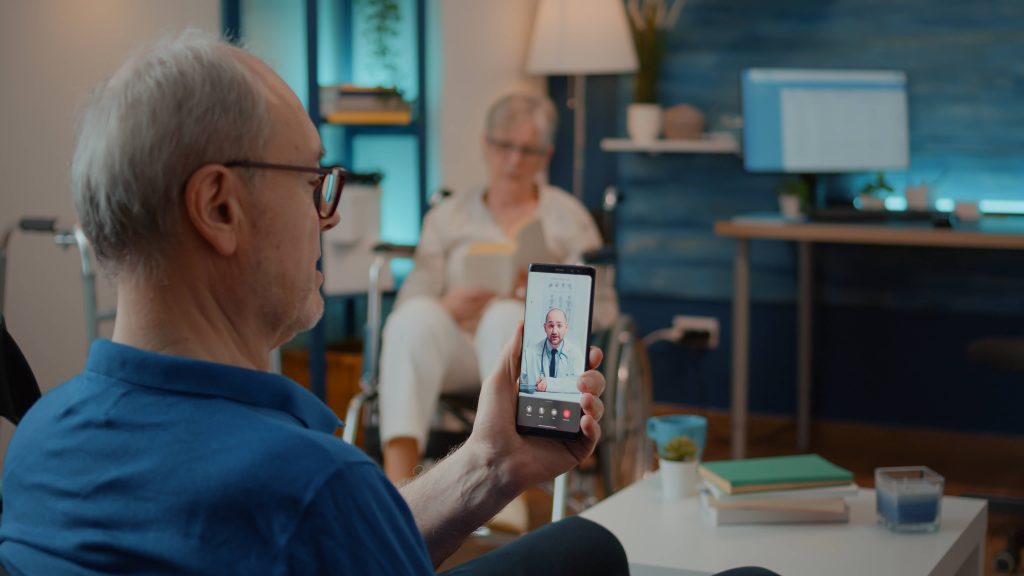
Telehealth can be particularly beneficial for people with disabilities who may face mobility challenges or live in rural or remote areas.
-
Telehealth can be used to provide a range of healthcare services, including medical consultations, mental health support, and rehabilitation services.
-
The Australian Government has expanded access to telehealth services during the COVID-19 pandemic, making it easier for people with disabilities to access healthcare services remotely.
-
Telehealth services may be delivered through a range of technologies, including video conferencing, telephone consultations, and secure messaging.
-
It is important for healthcare providers to ensure that telehealth services are accessible to people with disabilities, including providing alternative formats and ensuring that technology is accessible.
-
Telehealth services for people with disabilities may be covered by the National Disability Insurance Scheme (NDIS).
NDIS TELEHEALTH PSYCHOLOGY
Telehealth is a type of healthcare that links patients and healthcare providers via technology such as video conferencing, messaging, and remote monitoring. Patients can access medical consultations, diagnoses, treatments, and monitoring through telehealth from the convenience of their homes or any location with an internet connection.
Telehealth is especially beneficial for people with mobility challenges or who reside in remote regions because it removes the need for travel and shortens waiting times for appointments. Also, because it lowers overhead costs for healthcare providers and removes patient travel costs, telehealth can be more affordable than traditional healthcare.
ADVANTAGES OF TELEHEALTH
Telehealth takes on various forms, each with various applications and advantages.
Here are a few popular telehealth applications:
-
- Telemedicine: or medical consultations, diagnoses, and treatments, uses video conferencing technology to connect patients with healthcare professionals.
-
- Remote monitoring: In this form of telehealth, sensors or wearable technology are used to gather information about a patient’s health, such as their heart rate, blood pressure, or blood sugar levels. Healthcare professionals can then utilize this information to track patients and decide on treatments.
-
- Store-and-forward telehealth: This form of telehealth entails the sharing of medical data, including pictures, test results, or records, between healthcare professionals or between professionals and patients.
-
- Mobile health: This sort of telemedicine connects patients with medical professionals, allows them to receive health information, or allows them to keep track of their health concerns.
THE ASPECT OF TELETHERAPY
Teletherapy is a type of mental health therapy that utilizes video conferencing or messaging services. It is often referred to as online therapy or virtual therapy. Because of its accessibility, ease, and affordability, it has grown in popularity in recent years. A variety of mental health conditions, including anxiety, sadness, and trauma, can be treated with teletherapy.
Accessibility is one of the teletherapy’s main advantages. Clients can receive mental health services through teletherapy from the convenience of their homes or any location with an internet connection.
Those who live in remote areas or have mobility challenges will find this to be especially beneficial. Also, because travel expenses are avoided and overhead costs are decreased, teletherapy is more cheap than traditional therapy.
Despite its many advantages, not everyone may benefit from teletherapy. Severe mental health problems may necessitate in-person therapy or a higher degree of care for the individuals involved. Teletherapy might also not be suitable for people who don’t have access to a reliable internet connection or who prefer in-person contact.
WHAT IS TELETHERAPY RADIATION?
External beam radiation therapy, commonly referred to as teletherapy radiation, is a form of cancer treatment that uses high-energy radiation beams to kill cancer cells. A device known as a linear accelerator is used to deliver the radiation from outside the body.
The aim of teletherapy is majoring to target cancer cells while causing the least amount of harm to the normal tissues around the tumor Because the radiation is administered remotely, typically in another room, and cutting-edge imaging tools are used to direct the procedure, this type of therapy is known as “teletherapy.”
WHAT IS TELETHERAPY SPEECH?
By using online meeting technology, a speech therapist can work with a client remotely through teletherapy. This enables real-time communication between the therapist and client, exactly as they would in a face-to-face session.
When in-person sessions are not feasible or practical, speech therapy services can be delivered remotely through teletherapy. Also, it can assist patients who reside in rural or isolated places in getting access to speech therapy services that would not be offered locally. Any device with a reliable internet connection can be used for teletherapy speech, including a computer, tablet, or smartphone.
HOW THE NDIS INTERVENES IN TELEHEALTH
Australia’s National Disability Insurance Scheme (NDIS) is a government-funded initiative that helps people with disabilities get the assistance and services they require. The COVID-19 pandemic has made telehealth—the use of technology to deliver distant healthcare services—more crucial than ever, and the NDIS has responded by introducing modifications to the way it finances telehealth services.
Participants in the NDIS can utilize their funding to access a variety of telehealth services, such as:
-
- Telehealth consultations with medical experts like doctors, nurses, and therapists. These consultations can be held over the phone or through video conferencing.
- Remote monitoring services, such as tools that track a participant’s health status and provide data to medical experts for study.
- Assisted technology, including tablets and smartphones, and other tools that participants might use to receive telehealth services.
- To assist telehealth services during the COVID-19 epidemic, the NDIS has made a number of adjustments to its rules and financial plans. For instance, it has expanded the range of treatments that can be delivered via telehealth and raised the financing that is available for such programs.
GUIDELINES FOR SELECTING THE RIGHT PROVIDER
Before selecting a provider of telemedicine therapy, do your homework. There are some people who provide telemedicine therapy who are not licensed therapists. The offered remedy is ineffective and may be harmful. Working with an unqualified person also gives them access to your personal data.
Before participating in a session online, make sure your internet therapist has a valid license from your state. A master’s degree and some pertinent expertise in mental health therapy are required of your online therapist. For those in need of assistance, telehealth therapy is an excellent tool, but choosing the incorrect therapist can keep you from improving.
Mycareplace is a directory website that can help you connect to the right provider with ease. We provide support and guidance to participants in choosing the right provider for them. Log in to Mycareplace.com.au for more info
Want to connect to a teletherapist? Click on this link Connect_To_A_Teletherapist
